TABLE OF CONTENTS…
01 Ancient Virtues and Human Greatness.
02 The Four Pillars of the Good Life.
04 The Stoic Workout Plan for the Soul.
05 Vices: The Dark Side of Ancient (ALL) Ethics.
06 A Tool. A Book. A Mantra.
07 Bonus Article: The So What? of Ancient Virtues. Some Field Notes for Your Success.
Why We Can Make Great Progress and Still Feel Stuck.
Virtue Can Be Taught. Learned. Embodied.
Fruit Trees and the Inside-Outness of Virtue.
North Star. South Star. You Star.
Virtue as a Jedi Knight Pursuit.
08 Other Ways to Grow.
ABOUT PHILOSOPHER KINGS...
PHILOSOPHER KINGS is the creative work of Mark Shaffer— a training and education platform built to help you become as confident in your inner character and interpersonal skills as you are in your professional expertise. We teach you to think, speak, and act with knowledge, wisdom, and virtue. Our trainings and products focus on Emotional Intelligence, Relational Health, Core Professional Competencies, Work-LifeBalance, and Long-Term Legacy/ wealth creation.This isn’t just about getting better at your job. It’s about becoming the kind of person whom people trust, follow, and remember.
The design is simple: profound help any young professional or early career person can afford. We built Philosopher Kings because we deeply care about and are for the up and coming generation of leaders across the professions. You have been given less advantages, less opportunities, and higher expectations— we want to help you become excellent.
The Philosopher Kings Memo is a much-needed break from the dense, technical reading your profession constantly demands. In just a few pages each month, you’ll find fun, thoughtful, and surprisingly profound reflections designed to spark real growth— both personally and professionally. If you take the time to think through and apply the ideas inside each Memo, we believe your life will start to change. Monthby month, you’ll raise your standards forwisdom, character, and clarity. And overtime, that inner growth will set you apart—not just as a capable practitioner, but as a world-class professional others trust and admire.
Each Philosopher Kings Memo edition has a link to a short but impactful coaching training with Mark— a video training with follow up deep work. The goal is to be better than coaching programs that cost thousands of dollars, for the cost of a few coffees together.

FROM THE FOUNDER.
Welcome to the PK Memo. This issue is all about ancient virtues. Perhaps nothing has changed my life more dramatically than learning about the ancient cardinal virtues (and realizing how often I miss the mark). Speaking of Mark, I was a fully functioning professional who appeared successful on paper… when I realized I still had a lot of growing up to do. Cue the “internal authority adventure” mixtape.
Ancient virtues are character qualities that a great person comes to embody. In this issue, I want to teach you about four of them, known as the Stoic Canon: Wisdom, Justice, Courage, and Moderation. Learning to embody these four virtues has the power to unlock emotional and relational levels of health you may not even think possible. They are baller ways to… become.
I want every Philosopher Kings client to be proud of who they are and how they are evolving. While there is no shortcut to virtue, knowing the terms and concepts will set before you the ideal self you wish to be in the world and help you hit the target much more consistently.
IMO, no one is talking about virtue in the modern world—and everyone should be. Let’s go.
It is a gift to watch you all become excellent.
Mark Shaffer
Ph.D. in Classical and Ancient Near Eastern Literature. Founder of Philosopher Kings, LLC.


ANCIENT VIRTUES AND HUMAN GREATNESS.
Fine things are the objects of praise, base things of blame; and at the head of the fine things stand the virtues, and at the head of the base things the vices.
-On Virtues and Vices, 1.1-2
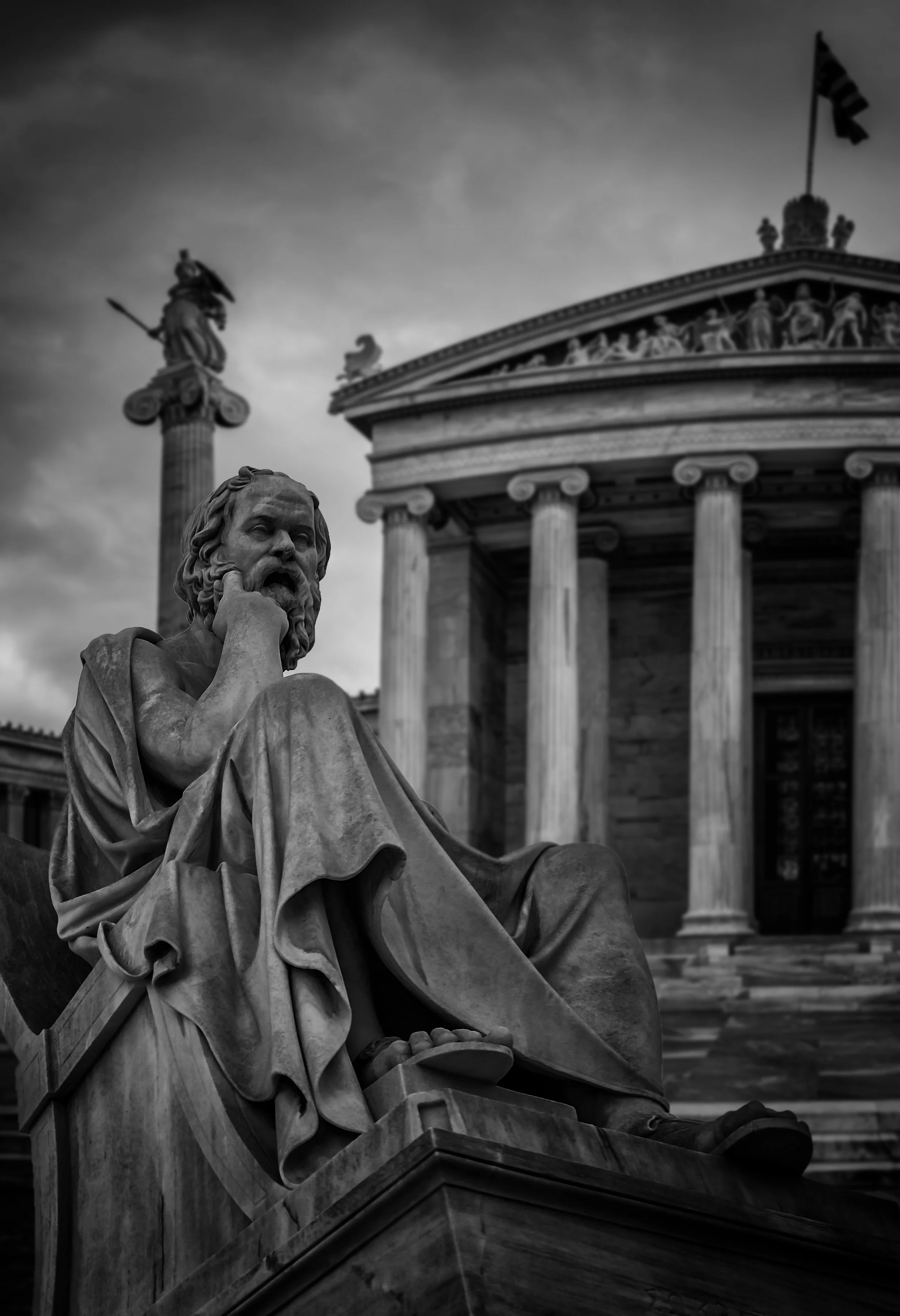
In the ancient world, to possess virtue and to be a good person… are the same thing.
Pseudo-Aristotle reminds us that fine things are worthy of praise, while base things deserve blame. At the top of the fine things stand the virtues—justice, courage, wisdom, and self-control. At the top of the base things stand the vices—injustice, cowardice, ignorance, and excess. When you praise someone, you’re really praising the virtues they’ve chosen to cultivate. When you condemn them, you’re naming the vices they’ve permitted to take root.
The ancients understood this intuitively. The Latin virtus comes from vir—not “man,” as it’s often mistranslated, but “human being.” To possess virtus was to live as a fully realized human—aligned, grounded, noble. The Greeks before them gave us aretē (ἀρετή), originally meaning “excellence” in any craft or skill, but eventually rising to signify the highest excellence: moral greatness. A person with aretē wasn’t just good at something—they were good at being human.
In the ancient imagination, virtue wasn’t abstract. It was a way of walking in the world. It was the quiet strength you carried, the internal authority you built, the excellence you practiced moment by moment. And that hasn’t changed. Not really. The virtues still sit at the top of the “fine things,” calling you toward a life you can be proud of—and a self you can stand inside with confidence.
EVERYTHING THAT PRODUCES VIRTUE IS WORTHY OF PRAISE.
Here’s the truth the ancients knew: striving for virtue creates a ripple effect of good. It’s not just the end result that matters—everything that produces virtue is worthy of praise, too. The effort. The learning. The setbacks. The recalibration. Every moment you choose the harder, better path leaves the world a little brighter than it was before.
When you practice justice—truly giving others what they’re due—your workplace gets better. Your friendships get better. Your family thrives. And when you embody courage, wisdom, or temperance, you create a forcefield of trust and stability around you. People can feel it. They rise to meet it.
The opposite is also true. Vices leave a trail of wreckage. They corrode your habits, distort your thinking, and break your relationships. A life shaped by vice doesn’t collapse all at once—it erodes through hundreds of small decisions to ignore the work of virtue.
And here’s where it gets personal: the same holds true for you and me.
When we begin to hold the same high standard for wisdom and virtue that we do for technical knowledge, we begin to shift. Not overnight, and not easily—
but deeply. The truth is, most professionals never even consider this. We spend so long acquiring knowledge that we start to believe we’ve arrived. We get attached to being “the expert,” the one with the answers.
But here’s the truth bomb: the practitioner who marries deep knowledge with wisdom, emotional intelligence, and humility? That’s a different breed of cat.
That’s the making of a modern-day Philosopher King. ⃤


The Four Pillars of the Good Life: How the Stoics Measured Ethics.
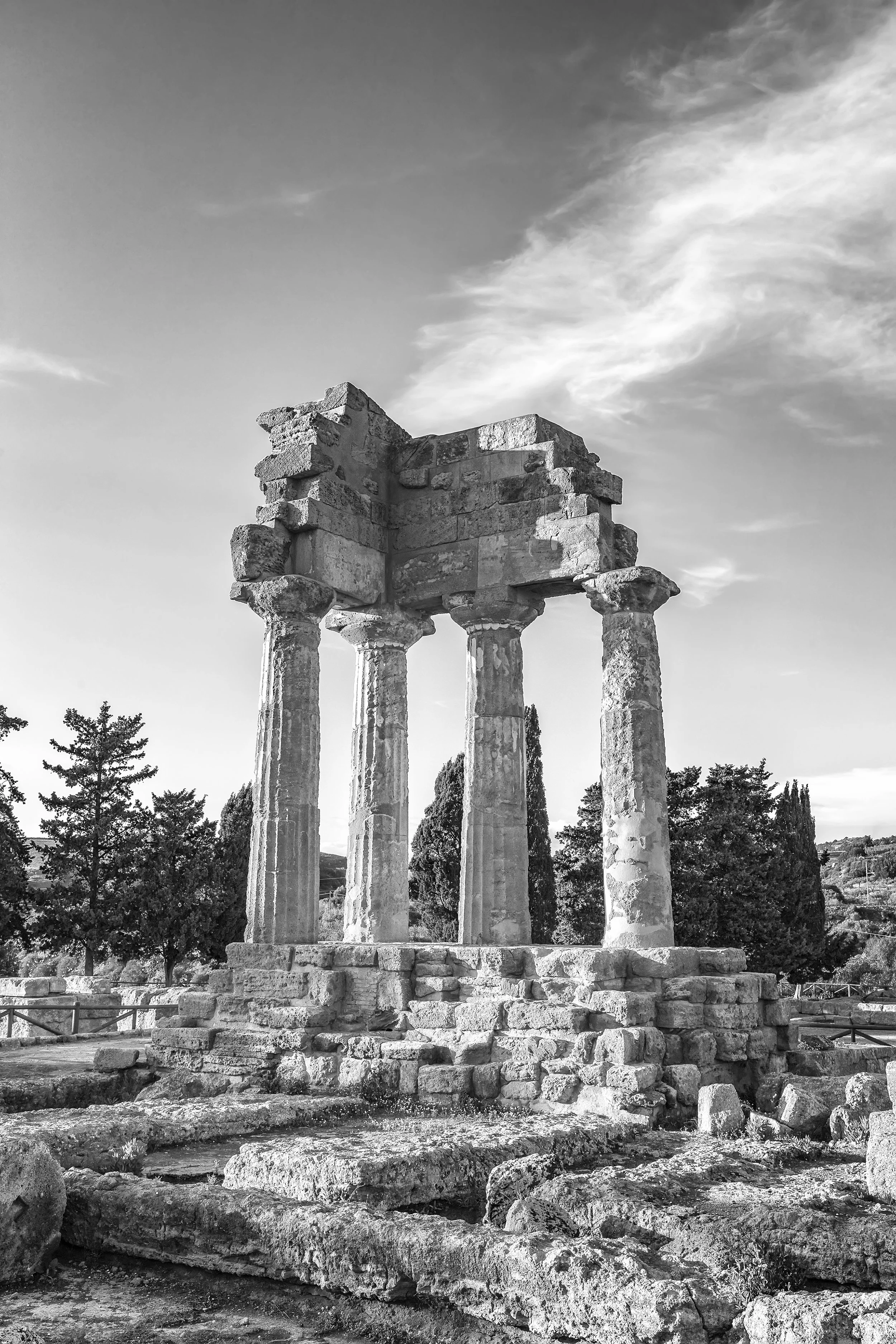
Think of the “Stoic Canon,” or the four virtues developed by in Greek philosophy and championed by the Stoics as the four pillars of your own virtue... The pillar of wisdom, the pillar of justice, the pillar of courage, and the pillar of moderation.
If the ancients agreed on anything, it’s this: a good life isn’t measured by what you own but by what you are. The Stoics took this to its most distilled form, teaching that all human ethics could be reduced to four cardinal virtues—wisdom, justice, courage, and temperance. Master these, they believed, and you will have mastered the art of living.
The Stoics weren’t inventing something new so much as refining the best moral thinking of the Greek and Roman world. Drawing on Plato’s division of the virtues and blending it with their own insights about human nature, they concluded that every moral choice falls under one of these four headings...
Wisdom.
Justice.
Courage.
Moderation.
The Power for Your Life is in Virtue’s Simplicity.
The Stoics taught that these four virtues are not separate skills to be picked and chosen like electives—they’re interconnected. To be truly courageous, you must have wisdom to know what’s worth risking.
To be truly just, you must have the temperance to curb your own self-interest. Each virtue strengthens the others.
In fact, these ancient thinkers came to believe that all virtue was actually one. You either possessed and practiced virtue… or you didn’t.
The power of this framework is in its simplicity. When life throws a moral dilemma in your path—and it will—you don’t need a 300-page ethics textbook. You can simply ask:
Is this wise?
Is this just?
Is this courageous?
Is this temperate?
If the answer to all four is “yes,” you’re on solid ground. The Stoics would remind us: the point of these virtues isn’t to win moral arguments—it’s to build moral character.
As Epictetus put it:
“Don’t explain your philosophy.
Embody it.” ▲

THIS MONTH’S TRAINING.
EACH MONTH, THE PK MEMO FEATURES ONE, ONLINE TRAINING. THE GOAL: MAXIMUM INTERNAL GROWTH IN MINIMUM TIME.
THIS MONTH’S TRAINING:
THE VIRTUES AND VALUES PYRAMID.
The Virtues & Values Pyramid exists to build your life from the inside out—on the right foundation, in the right order. In the modern workplace, it’s easy to measure ourselves (and everyone around us) by the wrong metrics: titles, output, applause, or whatever the algorithm says matters today.
But Philosopher Kings play a different game.
Imagine if your virtues and values—the unshakable core of who you are—were clearly named, deeply understood, and fiercely prized as the part of you that never changes. Imagine if “performance” became what it truly is: the narrow slice of life that naturally flows from a grounded, integrated, internally aligned human being.
Here’s why this matters:
Performance is fickle. You cannot always control the results of your work. Markets shift, organizations reorganize, and people misunderstand even our best intentions. But virtue—wisdom, justice, courage, moderation—that is always within your control.
The Virtues & Values Pyramid helps you return to that center. It reframes how you show up in the world, how you evaluate your own growth, and how you define success—and just as importantly, how you refuse to define it.
Build from the bottom up. Lead from the inside out.
Become the kind of professional no circumstance can shake.

VIRTUES.
For over two thousand years, the cardinal virtues have shaped ordinary people into extraordinary ones.
Wisdom. Justice. Courage. Moderation.
They’re the timeless disciplines that fortify your inner life and make you the kind of person others trust instinctively. In Philosopher Kings, we show you how to keep these virtues top of mind—not as abstract ideals, but as daily practices that anchor you in who you are becoming.
VALUES.
Your values are not random. They come from your story—your family, your wounds, your victories, your mentors, your faith, your work.
When you learn where your values came from and why they matter, something powerful happens: alignment becomes possible.
And alignment changes everything.
Your choices get cleaner. Your boundaries get stronger. Your voice gets clearer. Your life starts to feel like it’s finally moving in one direction instead of five.
EMOTIONS.
Emotions aren’t the enemy—they’re the signal. They remind you that you are human, alive, and responsive to the world.
But here’s the fork in the road:
You can place your emotional life on a foundation of virtues and values, or on the shaky ground of performance.
Build your identity on performance, and you're constructing a castle on sand.
Build it on virtues and values, and your emotional life becomes integrated, steady, and honest.
PERFORMANCE.
Performance is where most of us feel measured—and where we’re most tempted to measure ourselves.
I call bullshit.
You are not the sum of your recent wins or losses. You are the degree to which you are living in alignment (or disalignment) with what matters most.
When you understand this, performance stops being your identity and starts becoming your expression.
LET’S GO!
Just tap one of the buttons above or below, and I’ll walk you through the framework that shifts everything—from external scorekeeping to internal authority.
TRAINING THE FOUR VIRTUES: A STOIC WORKOUT PLAN FOR THE SOUL.
The Stoics never treated virtue as an abstract theory. Instead, they were practices you grew strong in through everyday living.
For them, wisdom, justice, courage, and temperance were like muscles—meant to be exercised, strengthened, and used in real life. You don’t inherit these virtues by chance, and you can’t buy them. You build them, one choice at a time.
Here’s how they trained each of the four cardinal virtues (called the Stoic Canon remember?): wisdom, justice, courage, and moderation. Some of us graduate college or professional school with a history of lots of fun... and lots of vice.
The virtues can seem foreign or even prudish. But I promise if you start trying to grow the Virtues, life will simply go better. You will start to become a uniquely better young professional, and an uncommonly good person. Here are 4 everyday practices for building virtue as a person and a professional...
1. Wisdom: Learn, Reflect, Discern
Wisdom begins with seeing the world as it really is, not as you wish it to be. The Stoics trained this through daily study and nightly reflection.
Your training rep: End your day by asking, What was within my control today? What wasn’t? How can I use what I learned today to live better tomorrow?
2. Justice: Act Fairly, Even in Small Things
Justice was to be practiced in every exchange, from the marketplace to the dinner table.
Your training rep: Once a day, deliberately act in a way that benefits someone else with no gain to yourself.
3. Courage: Step Toward the Thing You Fear
Courage is tested whenever comfort and principle collide.
As Seneca put it:
“It is not that we have a short time to live, but that we waste much of it.”
Your training rep: Choose one action today that you’ve been avoiding out of fear or discomfort. That’s your next step. Do it without delay.

4. Moderation: Choose “Enough” Over “More”
Moderation is self-mastery—keeping desire in its proper place. It is choosing two drinks instead of seven, watching a show before bed instead of binging into the morning.
Your training rep: For one meal today, stop eating at the first sign of fullness.
The Stoics believed these daily “reps” weren’t about punishment—they were about freedom.
A person who has trained in the virtues is free from the tyranny of impulse, fear, and selfishness.
The best time to begin training was yesterday.
The second-best time is right now. ▲
VICES: THE DARK SIDE OF ANCIENT ETHICS.
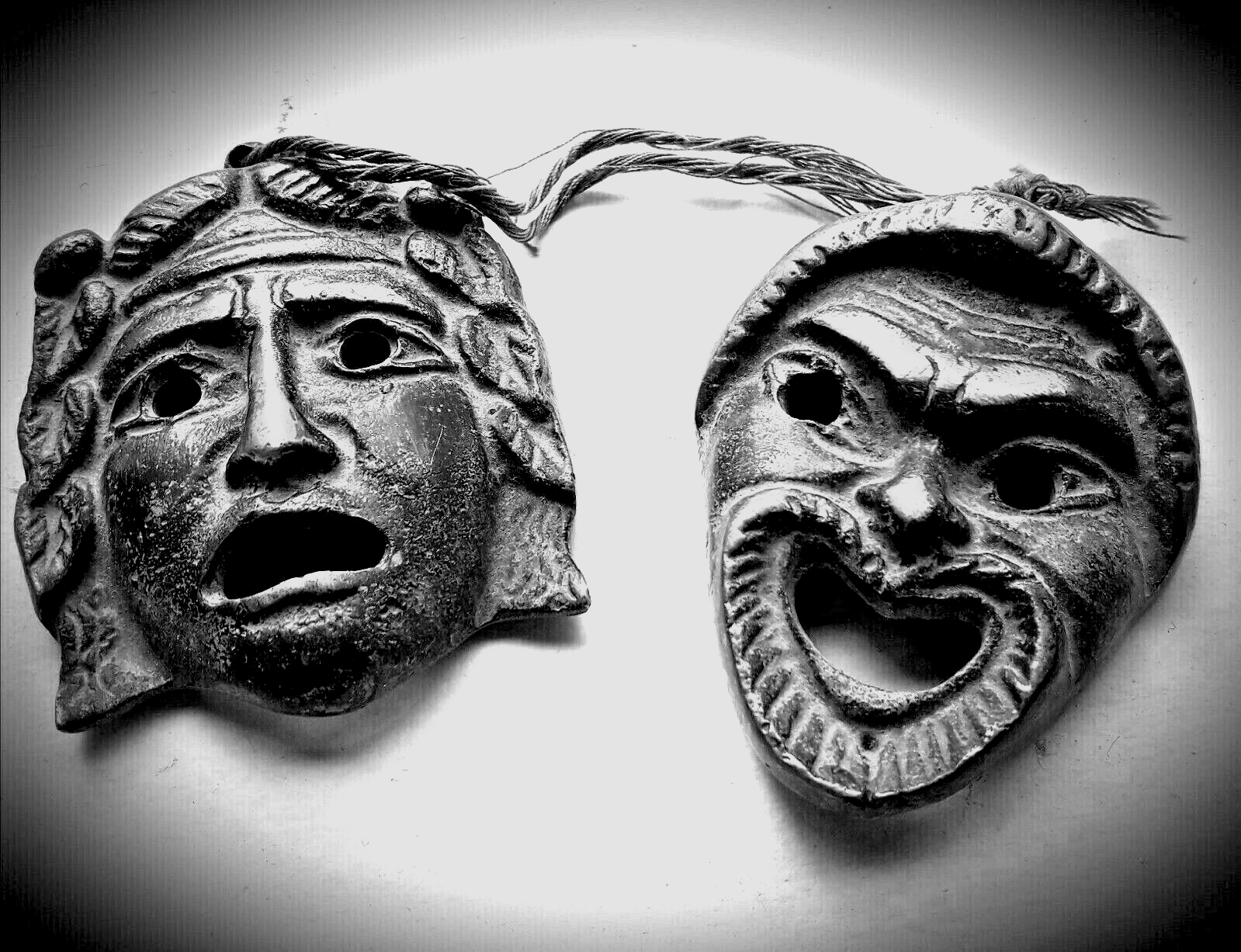
The Four Enemies of the Good Life: How Vices Derail Your Growth
The Stoics believed that if wisdom, justice, courage, and temperance are the four pillars of the good life, then their opposites are like termites gnawing away at the foundation. No house collapses in a single day; the damage begins small, hidden, and almost invisible.
In the same way, vice doesn’t kick the door down—it slips in quietly, often disguised as comfort, ambition, or self-protection. You don’t notice it at first. You tell yourself it’s just a shortcut, just one compromise, just a little slack in your discipline. But what seems harmless in the moment becomes habit, and habit becomes character.
Before long, the vices have shaped you just as much as the virtues could have—only now the shape is crooked.
If the virtues are your allies, working with you to build strength, clarity, and freedom, then the vices are your enemies. They weaken you where you most need to be strong, confuse you where you most need clarity, and rob you of freedom by chaining you to your worst impulses.
Think of it as a battle: every day you’re recruiting either virtues or vices into your army. The side you feed will win. Naming these enemies is the first act of resistance—because once you see them clearly, you can stop them before they conquer you. The vices which sit equally and opposite the virtues are these four:
Folly.
Injustice.
Cowardice.
Excess.
The Four Enemies of the Good Life: How Vices Derail Your Growth.
The Stoics believed that if wisdom, justice, courage, and temperance are the four pillars of the good life, then their opposites are like termites gnawing away at the foundation. No house collapses in a single day; the damage begins small, hidden, and almost invisible.
In the same way, vice doesn’t kick the door down—it slips in quietly, often under the disguise of comfort, ambition, or self-protection. You don’t notice it at first. You tell yourself it’s just a shortcut, just one compromise, just a little slack in your discipline. But what seems harmless in the moment becomes habit, and habit becomes character.
Before long, the vices have shaped you just as much as the virtues could have—only now the shape is crooked.
If the virtues are your allies, working with you to build strength, clarity, and freedom, then these vices are your enemies. They weaken you where you most need to be strong, confuse you where you most need clarity, and rob you of freedom by chaining you to your worst impulses.
Think of it as a battle: every day you’re recruiting either virtues or vices into your army. The side you feed will win. Naming these enemies is the first act of resistance—because once you see them clearly, you can stop them before they conquer you. ▲

A Tool.
A Book.
A Mantra.
A TOOL.
Activating Behaviors – An activating behavior is a tiny, strategic action that helps you bypass resistance and slide straight into the work you want to do. It’s less about motivation and more about engineering momentum. For example, laying out your gym clothes the night before is an activating behavior, because it removes friction and quietly nudges you toward action before your brain wakes up enough to negotiate. Or if you’re not feeling a run, just start jogging for two full minutes; your body will often carry you farther once you’re already in motion. The point is simple: don’t wait to feel ready. Build small activating behaviors into your routine, and they’ll carry you into the work long before motivation arrives.
A BOOK.
177 Mental Toughness Secrets of the World Class by Steve Siebold is a great resource
for learning to think about yourself and your professional journey like a world class practitioner
and person. The book is numbered from 1 to 177, and each section is one to three pages.
Siebold’s goal is to give you a framework and move you to embodying the concept as fast as possible: rapid normalization of the champion mindset.
A MANTRA.
Plato explains: “Wise men talk because they have something to say. Fools talk because they have to say something.”
This is an old adage will get you by nine times out of ten. The big idea, there are a whole lot of times where it is better to say nothing or at least say way less. As a young professional, many times you will be tempted to go on a ramble to either demonstrate authority (you feel you are not being given) or make up for a mistake which was embarrassing.
It is way better to listen to guidance and say, “thank you for your teaching,”or, “I greatly appreciate your guidance.” Show yourself to be wise by limiting your speech and let your young colleagues do the over-talking.

Field Note #1. Why we can go so far... and still feel so stuck.
Okay, gear change. Here’s an essential ingredient for mixing up a virtuous life: you need to own how you feel stuck. Most high performers go long on training, practice hours, and professional grind, and then work blindly to stay on top of their game.
The problem is, very few of us have ever slowed down to ask, “Am I a good human being? And why?”
We can ascend to the stars as an engineer, attorney, or entrepreneur only to discover that we’ve built habits that keep us tethered close to the ground.
Worse still, the very overcommitment to professional success—the obsession that got us to where we are—often sidelines the development of internal authority. And so what to do? Don’t waste time on shame, just be honest.
How do you speak to people? How often do you have an enemy at work or in your inbox? What habits would you be mortified to see made public? Where are you morally stuck?
Now ask how the cardinal virtues—wisdom, justice, courage, and moderation—might begin to reshape you. Remember: we’re all works in progress, and at Philosopher Kings we celebrate anyone who’s on the journey of growth inside.


Field Note #2. Virtue Can Be Taught, Learned, and Embodied.
Fortunately, for all of us, Socrates, Plato, Aristotle, and the long line of thinkers after them believed that virtue can be taught. The best teachers in any discipline know that their subject matter is only part of the story— What’s even more transformative is the internal growth that happens as students imitate the words and actions of their mentors.
Think about the most important guides in your life so far. Chances are, the way you speak, act, and carry yourself looks a lot like a mash-up of the top three people who invested in you. Great teachers create virtuous students. That’s why I believe virtue isn’t just theoretical—it’s transferable.
And that’s the highest goal of Philosopher Kings: that over time you learn to live with virtue as a professional and a person. In a world of mediocrity and excuse-making, be a Philosopher King who takes full ownership of your growth toward knowledge, wisdom, and virtue.

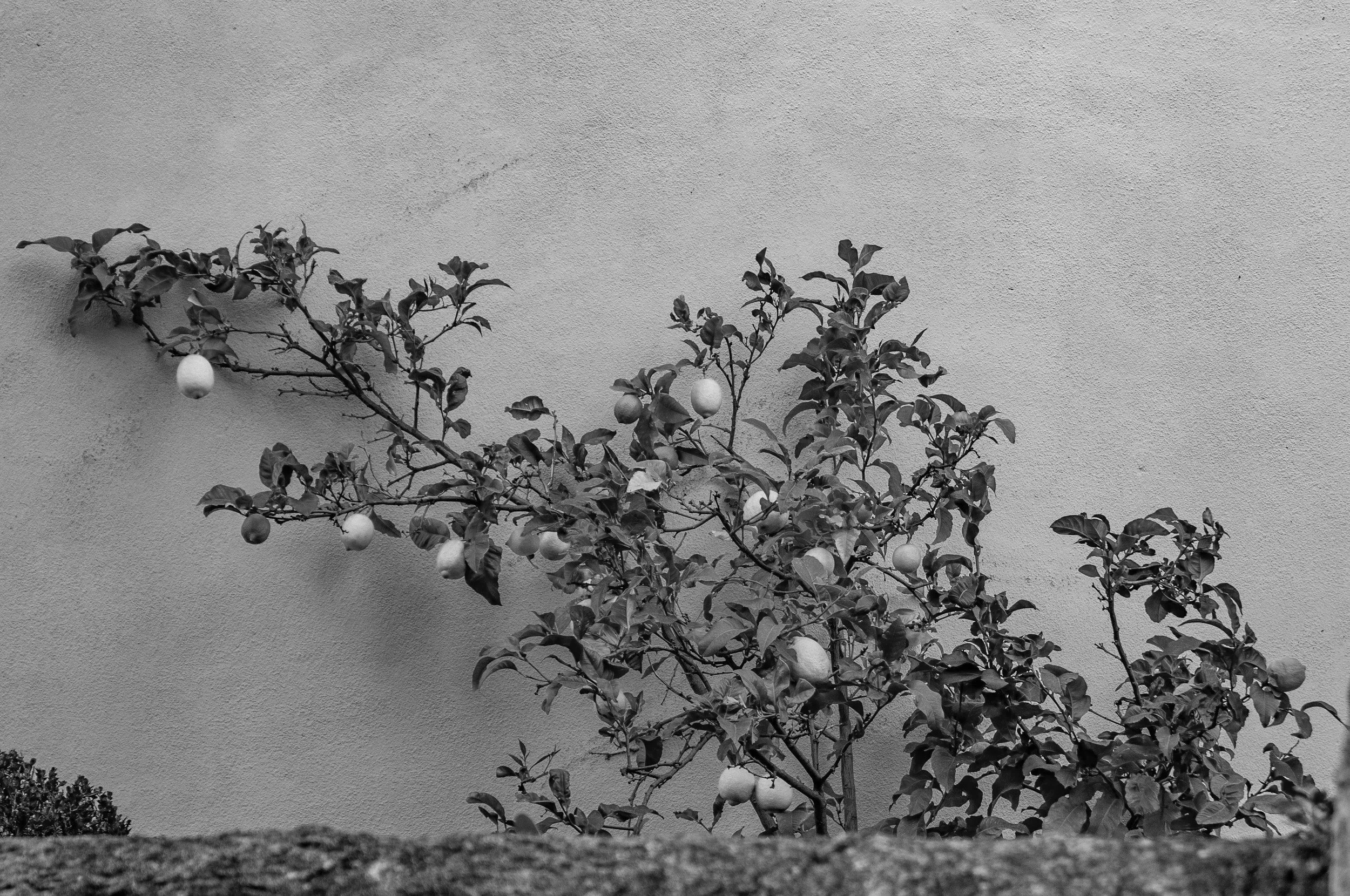
Field Note #3: Fruit Trees and the Inside-Outness of Virtue.
While I’m an avid learner of the classical tradition, my academic research has focused on the intersection of Greek and Jewish thought. One of the most influential Jewish sages who ever lived was Jesus (who, fun fact, was not a Christian—relax).
Jesus used a familiar Mediterranean image to talk about virtue: the fruit tree:
“Every good tree bears good fruit, but a bad tree bears bad fruit. A good tree cannot bear bad fruit, and a bad tree cannot bear good fruit.” Matthew 7:17–18
In other words, you only find certain kinds of fruit on certain trees. For Jesus, this was the anatomy of moral life.
If you’ve cultivated goodness inside, you’ll grow good thoughts, words, and actions. If you have cultivated evil, your fruit will match just the same.
This is the huge idea: virtue has an inside-outness. When you cultivate goodness inwardly, your outward life will align—both as a professional and as a person.
Field Note #4.
North Star. South Star. You Star.
If you’ve ever tuned into the PAST FORWARD podcast, you’ve heard me talk about north and south stars. These are models of who you want to become and who you want to avoid becoming.
Here’s how virtue fits into that framework:
North Star: The professional who embodies wisdom, justice, courage, and moderation. They’re excellent and calm. They elevate everyone around them. Follow this person. Fist bump.
South Star: The professional marked by foolishness, injustice, cowardice, and excess. They’re hurried, paranoid, judgmental, and draining. Run away from this person.
You Star: Your goal. Someone who shines like a star in a dark sea of apathy. When you joyfully display wisdom, justice, courage, and moderation, you’ll not only grow personally—you’ll eventually become a North Star for others.


Field Note #5. Virtue is a Jedi Knight Pursuit.
01. Jedi Knights and Virtue.
Change is hard. Becoming virtuous is harder. It’s like training as a Jedi Knight: it takes time, practice, and resilience. On the path to internal authority, you’ll have good days and bad days, virtuous wins and backslides. Keep the overall goal in sight: to be an uncommonly healthy, respected professional and person.
02. Ask: In what ways am I virtuous, and how does it make me feel?
Virtue leaves a wake of goodness. When you act with wisdom, justice, courage, or moderation, how does it feel? Pay attention to that momentum.
03. Ask: Where do I lack virtue?
Vice leaves a wake of exhaustion and trouble. Make a list of your worst habits, unhelpful thought patterns, and destructive actions. Facing your vices is step one toward virtue.
04. Ask: What people and places compromise my virtue?
Growth often triggers resistance from old influences. Notice how certain people or environments pull you backward. Where do you feel pressured to compromise the person you want to be? Guard your growth.
05. The “so what?” of virtue:
Your skills can make you successful, but only your virtue can make you whole. Success without virtue is exhausting. Success with virtue is life-giving. Start asking the hard questions, follow your North Stars, flee the South Stars, and shine as a You Star. This is your field guide to becoming more than excellent at your work—you’re becoming excellent at life. ▲

Other Ways To Grow.
Here are some more ways to progress yourself with the Philosopher Kings Platform.
-
PAST FORWARD. THE PHILOSOPHER KINGS PODCAST.
The “Past Forward” Podcast brought to you by Philosopher Kings, where ancient wisdom meets modern ambition. The show draws from timeless philosophy, mythology, and classical thought to help young professionals lead with clarity, character, and purpose. What if in ten minutes on your commute you could learn to think, speak, and act with knowledge, wisdom, and virtue (become a Philosopher King...). If you're hungry for more than productivity hacks— and ready to think, speak, and act with depth— you're in the right place. It’s time to move your life past forward.
-
THE PHILOSOPHER KINGS YOUTUBE CHANNEL.
The Philosopher Kings Youtube Channel takes the best of philosophy, mythology, and timeless psychology to help young professionals grow in clarity, character, and calm. From Epictetus to the Stoics, from Plato to practical habits— this channel gives you the mindset tools and inner framework to lead wisely and live meaningfully. If you want to think deeper, show up better, and build a life that actually matters— you’re in the right place.
-
THE PHILOSOPHER KINGS BLOG.
The Philosopher Kings Blog is where deep thinking meets real professional and personal life. We explore ancient philosophy, timeless stories, and practical frameworks to help modern professionals build wisdom, emotional intelligence, and ethical clarity. If you want more than hacks and hustle— if you're after meaning, mastery, and a life well-lived— this is your corner of the internet.